contextlib 模块 - 上下文管理器工具
Python contextlib 模块详解,提供上下文管理器工具,支持 with 语句、异常处理、资源管理和装饰器功能
contextlib 模块 - 上下文管理器工具
📝 概述
contextlib 模块包含的工具用于处理上下文管理器和 with 语句。它提供了创建和管理上下文管理器的实用工具,使代码更加简洁和健壮。通过 contextlib,您可以轻松地将函数转换为上下文管理器,管理多个上下文对象,以及处理异常和资源清理。
🎯 学习目标
- 掌握上下文管理器 API 的基本原理和使用方法
- 学会使用 contextlib 模块创建和管理上下文管理器
- 理解 @contextmanager 装饰器的工作机制
- 掌握异常处理和资源管理的最佳实践
- 学会使用 ExitStack 进行动态上下文管理
- 了解输出重定向和异常抑制技术
📋 前置知识
- Python 基本语法和面向对象编程
- with 语句的基本使用
- 异常处理机制
- 生成器和装饰器概念
- 文件操作基础
🔍 详细内容
上下文管理器 API
上下文管理器(context manager)负责管理一个代码块中的资源,会在进入代码块时创建资源,然后在退出代码块后清理这个资源。例如,文件就支持上下文管理器API,可以确保完成文件读写后关闭文件。
with open('test.txt', 'wt') as f:
    f.write('contents go here')
上下文管理器由with语句启用,这个API包括两个方法。执行流进入with中的代码块时会运行__enter__()方法。它会返回在这个上下文中使用的一个对象。执行流离开with块时,则调用这个上下文管理器的__exit__()方法来清理所使用的资源。
class Context:
    def __init__(self):
        print('__init__()')
    def __enter__(self):
        print('__enter__()')
        return self
    def __exit__(self, exc_type, exc_val, exc_tb):
        print('__exit__()')

with Context():
    print('Doing work in the context')
相对于try:finally块,结合上下文管理器和with语句是一种更紧凑的写法,因为总会调用上下文管理器的__exit__()方法,即使产生异常的情况下也会调用这个方法。
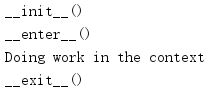
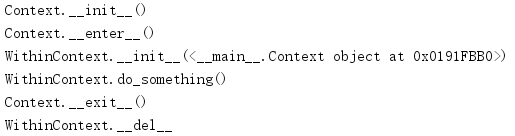
如果with语句的as子句中指定了名,那么__enter__()方法可以返回与这个名关联的任何对象。在这个例子中,Context会返回一个使用打开的上下文的对象。
class WithinContext:
    def __init__(self, context):
        print('WithinContext.__init__({})'.format(context))
    def do_something(self):
        print('WithinContext.do_something()')
    def __del__(self):
        print('WithinContext.__del__')

class Context:
    def __init__(self):
        print('Context.__init__()')
    def __enter__(self):
        print('Context.__enter__()')
        return WithinContext(self)
    def __exit__(self, exc_type, exc_val, exc_tb):
        print('Context.__exit__()')

with Context() as c:
    c.do_something()
与变量c关联的值是__enter__()返回的对象,这不一定是with语句中创建的Context实例。
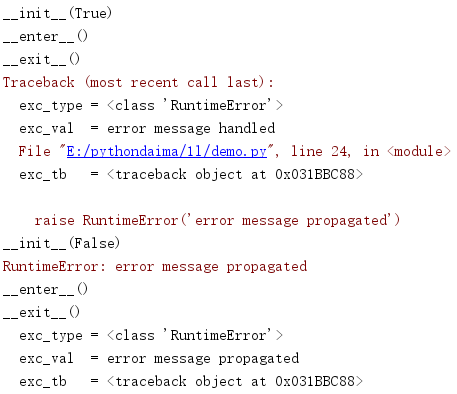
exit()方法接收一些参数,其中包含with块中产生的所有异常的详细信息。
class Context:
    def __init__(self, handle_error):
        print('__init__({})'.format(handle_error))
        self.handle_error = handle_error
    def __enter__(self):
        print('__enter__()')
        return self
    def __exit__(self, exc_type, exc_val, exc_tb):
        print('__exit__()')
        print('  exc_type =', exc_type)
        print('  exc_val  =', exc_val)
        print('  exc_tb   =', exc_tb)
        return self.handle_error

with Context(True):
    raise RuntimeError('error message handled')
print()
with Context(False):
    raise RuntimeError('error message propagated')
如果上下文管理器可以处理这个异常,那么__exit__()应当返回一个true值来指示这个异常不需要传播。如果返回false,则会在__exit__()返回后再次抛出这个异常。
💡 实际应用
上下文管理器作为函数修饰符
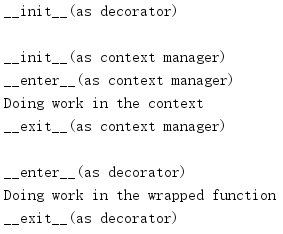
类ContextDecorator增加了对常规上下文管理器类的支持,因此其不仅可以作为上下文管理器,也可以作为函数修饰符。
import contextlib

class Context(contextlib.ContextDecorator):
    def __init__(self, how_used):
        self.how_used = how_used
        print('__init__({})'.format(how_used))
    def __enter__(self):
        print('__enter__({})'.format(self.how_used))
        return self
    def __exit__(self, exc_type, exc_val, exc_tb):
        print('__exit__({})'.format(self.how_used))

@Context('as decorator')
def func(message):
    print(message)

print()
with Context('as context manager'):
    print('Doing work in the context')
print()
func('Doing work in the wrapped function')
使用上下文管理器作为修饰符时有一点不同:enter()返回的值在被修饰的函数中不可用,这与使用with和as时不一样。传入被修饰函数的参数可以正常使用。
从生成器到上下文管理器
采用传统方式创建上下文管理器并不难,即编写一个包含__enter__()和__exit__()方法的类。不过有些时候,如果只有很少的上下文要管理,那么完整的写出所有代码便会成为额外的负担。在这些情况下,可以使用contextmanager()修饰符将一个生成器函数转换为上下文管理器。
import contextlib

@contextlib.contextmanager
def make_context():
    print('  entering')
    try:
        yield {}
    except RuntimeError as err:
        print('  ERROR:', err)
    finally:
        print('  exiting')

print('Normal:')
with make_context() as value:
    print('  inside with statement:', value)

print('\nHandled error:')
with make_context() as value:
    raise RuntimeError('showing example of handling an error')

print('\nUnhandled error:')
with make_context() as value:
    raise ValueError('this exception is not handled')
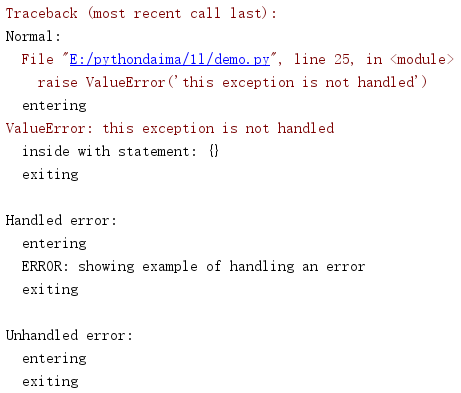
生成器要初始化上下文,调用一次yield,然后清理上下文。所生成的值(如果有)会绑定到with语句as子句中的变量。with块中抛出的异常会在生成器中再次抛出,从而可以在生成器中得到处理。
contextmanager()返回的上下文管理器派生自ContextDecorator,所以也可以被用作函数修饰符。
import contextlib

@contextlib.contextmanager
def make_context():
    print('  entering')
    try:
        # Yield control, but not a value, because any value
        # yielded is not available when the context manager
        # is used as a decorator.
        yield
    except RuntimeError as err:
        print('  ERROR:', err)
    finally:
        print('  exiting')

@make_context()
def normal():
    print('  inside with statement')

@make_context()
def throw_error(err):
    raise err

print('Normal:')
normal()

print('\nHandled error:')
throw_error(RuntimeError('showing example of handling an error'))

print('\nUnhandled error:')
throw_error(ValueError('this exception is not handled'))
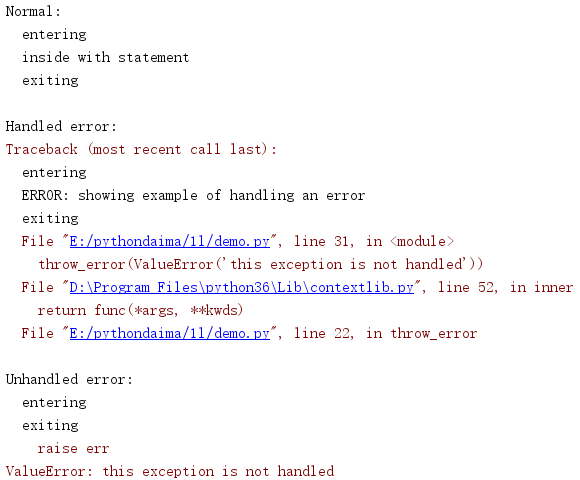
与前面的ContextDecorator例子一样,上下文管理器被用作修饰符时,生成器生成的值在被修饰的函数中不可用。传入被修饰函数的参数仍然可用,如这个例子中的throw_error()所示。
关闭打开的句柄
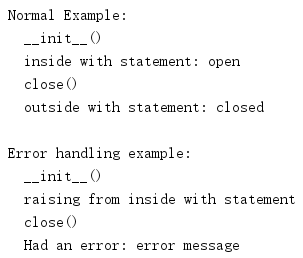
file类直接支持上下文管理器API,但另外一些表示打开句柄的对象却并不支持。contextlib的标准库文档中给出的示例是从urllib.urlopen()返回的对象。另外一些遗留的类会使用close()方法但不支持上下文管理器API。为了确保关闭句柄,要使用closing()为它创建一个上下文管理器。
import contextlib

class Door:
    def __init__(self):
        print('  __init__()')
        self.status = 'open'

    def close(self):
        print('  close()')
        self.status = 'closed'

print('Normal Example:')
with contextlib.closing(Door()) as door:
    print('  inside with statement: {}'.format(door.status))
print('  outside with statement: {}'.format(door.status))

print('\nError handling example:')
try:
    with contextlib.closing(Door()) as door:
        print('  raising from inside with statement')
        raise RuntimeError('error message')
except Exception as err:
    print('  Had an error:', err)
不论with块中是否有错误,都会关闭这个句柄。
忽略异常
很多情况下,忽略库产生的异常通常很有用,因为这个错误可能会显示期望的状态已经被实现,否则该错误可以被忽略。要忽略异常,最常见的方法是利用一个try:except语句,其在except块中只包含一个pass语句。
class NonFatalError(Exception):
    pass

def non_idempotent_operation():
    raise NonFatalError(
        'The operation failed because of existing state'
    )

try:
    print('trying non-idempotent operation')
    non_idempotent_operation()
    print('succeeded!')
except NonFatalError:
    pass

print('done')
在这种情况下,这个操作会失败,而错误将被忽略。

try:except也可以被替换为contextlib.suppress(),以更显式的抑制with块中产生某一类异常。
import contextlib

class NonFatalError(Exception):
    pass

def non_idempotent_operation():
    raise NonFatalError(
        'The operation failed because of existing state'
    )

with contextlib.suppress(NonFatalError):
    print('trying non-idempotent operation')
    non_idempotent_operation()
    print('succeeded!')

print('done')
在这个更新后的版本中,异常会被完全丢弃。

重定向输出流
设计不当的库代码可能会直接写sys.stdout或sys.stderr,而没有提供参数来配置不同的输出目标。可以用redirect_stdout()和redirect_stderr()上下文管理器从这些函数捕捉输出,因为无法修改这些函数的源代码来接收新的输出参数。
from contextlib import redirect_stdout, redirect_stderr
import io
import sys

def misbehaving_function(a):
    sys.stdout.write('(stdout) A: {!r}\n'.format(a))
    sys.stderr.write('(stderr) A: {!r}\n'.format(a))

capture = io.StringIO()
with redirect_stdout(capture), redirect_stderr(capture):
    misbehaving_function(5)

print(capture.getvalue())
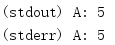
在这个例子中,misbehaving_function()同时写至stdout和stderr,不过两个上下文管理器将这个输出发送到同一个io.StringIO实例,会在这里保存以备以后使用。
动态上下文管理器栈
大多数上下文管理器都一次处理一个对象,如单个文件或数据库句柄。在这些情况下,对象是提前已知的,并且使用上下文管理器的代码可以建立这一个对象上。另外一些情况下,程序可能需要在一个上下文中创建未知数目的对象,控制流退出这个上下文时所有这些对象都要清理。ExitStack就是用来处理这些更动态的情况。
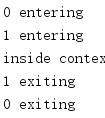
ExitStack实例会维护清理回调的一个栈数据结构。这些回调显式的填充在上下文中,在控制流退出上下文时会以逆序调用所有注册的回调。结果类似于有多个嵌套的with语句,只不过它们是动态建立的。
可以使用多种方法填充ExitStack。下面这个例子使用enter_context()来为栈增加一个新的上下文管理器。
import contextlib

@contextlib.contextmanager
def make_context(i):
    print('{} entering'.format(i))
    yield {}
    print('{} exiting'.format(i))

def variable_stack(n, msg):
    with contextlib.ExitStack() as stack:
        for i in range(n):
            stack.enter_context(make_context(i))
        print(msg)

variable_stack(2, 'inside context')
enter_context()首先在上下文管理器上调用__enter__()。然后把它的__exit__()方法注册为一个回调,撤销栈时将调用这个回调。
⚠️ 注意事项
- 使用 @contextmanager 装饰器时,生成器函数只能包含一个 yield 语句
- 在生成器中处理异常时,需要正确地重新抛出未处理的异常
- 使用 ExitStack 时,注册的回调函数会按照注册的逆序执行
- redirect_stdout 和 redirect_stderr 只影响 Python 代码的输出,不影响 C 扩展的输出
- suppress() 只能抑制指定类型的异常,其他异常仍然会正常传播
🔗 相关内容
📚 扩展阅读
🏷️ 标签
contextlib 上下文管理器 with语句 异常处理 资源管理 装饰器
最后更新: 2024-01-15
作者: Python 文档团队
版本: 1.0
讨论与反馈
欢迎在下方留言讨论,分享你的学习心得或提出问题。评论基于GitHub Issues,需要GitHub账号。